The Cambridge A-Level Paper Leaks in Pakistan: Impact on Students and a Blueprint for Government Control
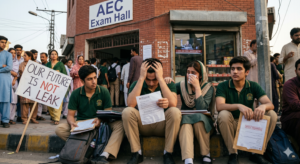
The academic integrity of the international examination system in Pakistan recently faced a severe crisis following reports of Cambridge Assessment International Education (CAIE) A-Level paper leaks. For thousands of dedicated students who spend years preparing for these high-stakes exams, a paper leak is not just an administrative failure—it is a devastating blow to their futures.
When the security of an exam is compromised, it shakes public trust, disrupts university admissions, and places an unfair emotional and academic burden on honest students. Addressing this issue requires understanding how these breaches happen and implementing strict, modern regulatory frameworks to prevent future occurrences.
How Exam Papers Get Leaked: The Vulnerability Chain
International examinations like Cambridge O and A-Levels rely on a complex, multi-layered logistics chain. Weaknesses can appear at several critical points before the paper ever reaches a student’s desk:
-
Logistical Transit Vulnerabilities: Exam papers are printed centrally and shipped across international borders to local hubs. Any security lapse during transit, handling at ports, or distribution to regional centers creates a window for unauthorized access.
-
Storage and Institutional Breaches: Once papers arrive in the country, they are securely stored in designated banks or institutional vaults. Leaks frequently occur due to insider collusion or compromised staff at localized storage facilities or examination venues who bypass security protocols just hours before the scheduled exam time.
-
The Digital Amplification Factor: In the modern era, a physical breach that once only affected a single classroom can now go global instantly. Once a paper is photographed, it spreads across encrypted messaging apps and social media platforms within minutes, compromising the entire national or regional examination cohort.
The Devastating Impact on Honest Students
The consequences of examination leaks fall most heavily on the students who have put in the hard work, honest hours, and disciplined preparation.
-
Severe Academic Anxiety and Psychological Distress: Students spend months under intense pressure preparing for their A-Levels. News of a leak causes immediate panic, confusion, and feelings of helplessness, severely disrupting their mental focus for remaining papers.
-
The Injustice of Unfair Evaluation Metrics: When a leak occurs, Cambridge must maintain global standards. This often results in canceling the paper entirely and relying on alternative “evidence-based” grading, using school-assessed marks or performance on remaining components. This system frequently penalizes top-tier, hardworking students whose actual exam day performance would have outperformed historical averages.
-
Disrupted University Admissions and Future Careers: A-Level results are the definitive gateway to premium national institutions and international universities. Delays in component grading, altered marks, or compromised credibility can jeopardize university placements, scholarship offers, and visa processing timelines.
How the Government Can Check, Intervene, and Control the Crisis
While Cambridge handles the academic testing, the local administration, law enforcement, and regulatory bodies hold the ultimate responsibility for protecting the integrity of the students taking exams within Pakistan’s borders. The government can assert tight control through a multi-pronged approach:
1. Immediate Monitoring and Digital Investigation
The Federal Investigation Agency (FIA) and its cybercrime wings must be actively integrated into the examination window. By monitoring public forums, social media channels, and encrypted communication networks leading up to and during exam days, digital forensics teams can trace the source of leaked digital files back to the original device and physical location.
2. Reforming Physical Storage and Transport Protocols
The government should mandate that all international exam materials be treated with high-level security protocols. This includes:
-
Enforcing strict double-lock verification systems at all banking vaults and distribution centers.
-
Requiring real-time GPS tracking on all transit vehicles moving exam papers to venues.
-
Mandating 24/7 CCTV surveillance at localized storage centers, with live feeds accessible by state educational auditors.
3. Implementing Strict Legal and Institutional Penalties
To create a powerful deterrent, the government must pass specific legislation targeting academic leaks. Any institution, examination center, or individual found complicit in leaking, distributing, or purchasing compromised testing materials should face severe criminal prosecution, heavy financial penalties, and the immediate cancellation of their operational licenses.
4. Shifting to Modern Digital Delivery Systems
The ultimate long-term solution lies in eliminating physical paper transit altogether. The government should encourage and partner with international boards to transition toward secure, computer-based testing models or “Print-on-Demand” systems. Under a digital framework, encrypted papers are sent electronically to centers and decrypted using time-locked biometric keys just minutes before the examination starts, completely eliminating the traditional distribution vulnerabilities.
Preserving the Future of Our Youth
A student’s hard work should never be undermined by institutional negligence or criminal exploitation. Protecting the sanctity of examinations is essential to ensuring that every young mind receives a fair, merit-based chance at success. By combining strict state-level oversight with modernized security measures, the government can effectively eliminate these vulnerabilities, safeguarding both the international credibility of Pakistan’s academic system and the future of its students.